The Andaman Islands
A remote archipelago of turquoise water, coral reefs and rainforest in the Bay of Bengal, closer to Southeast Asia than to mainland India, and one of the country's most striking island destinations.
Where the Andamans are
The Andaman Islands lie in the Bay of Bengal, several hundred kilometres off India's eastern coast and geographically nearer to Myanmar and Thailand than to the Indian mainland. Together with the Nicobar Islands to the south, they form the Union Territory of Andaman and Nicobar, with Port Blair, officially Sri Vijaya Puram, as the capital.
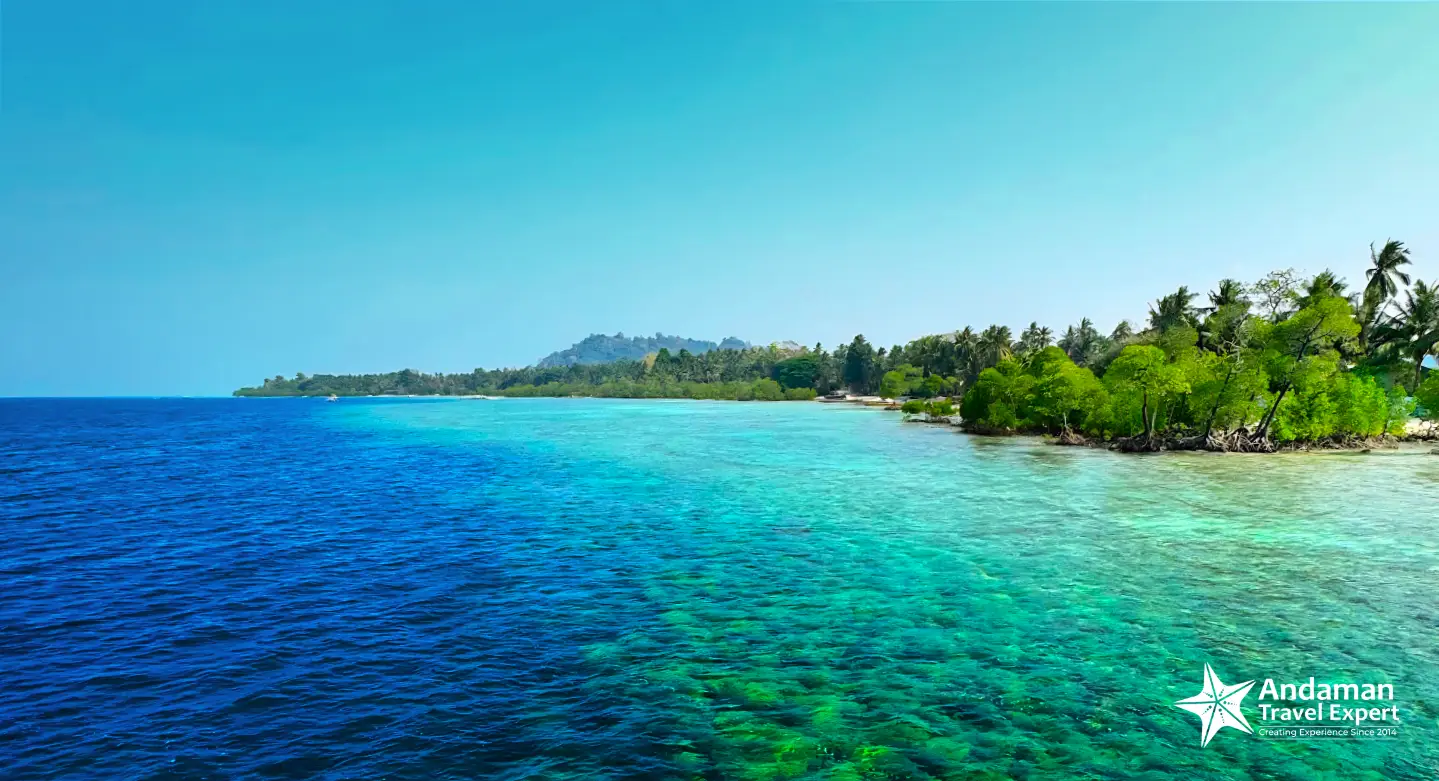
The archipelago is made up of more than five hundred islands, though only a small number are open to visitors. That combination of scale and seclusion is exactly what gives the Andamans their character: long stretches of coast with barely a soul on them, water clear enough to see the reef from the surface, and forest that runs almost to the sand.
Beaches, reefs and marine life
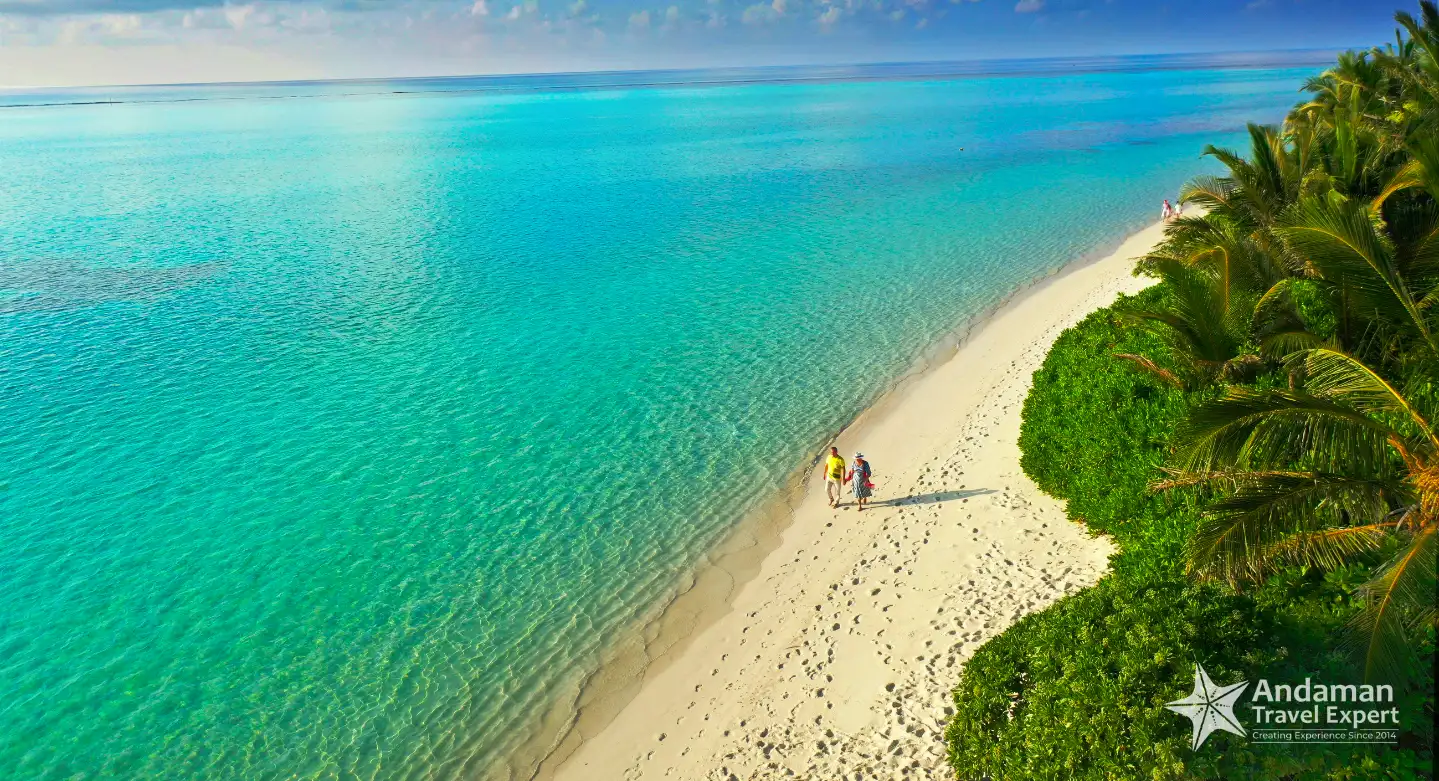
The Andamans are best known for their beaches, and the reputation is earned. Radhanagar Beach on Swaraj Dweep, still widely called Havelock, is regularly ranked among the finest in Asia, a long white curve backed by forest and famous for its sunsets. Beyond the headline sands, the islands are one of the best places in the country to dive and snorkel. Warm water, strong visibility in season and healthy coral draw beginners and experienced divers alike, with turtles, rays and reef fish common on the better sites. Quieter islands such as Shaheed Dweep, formerly Neil, offer calm shallow bays and a slower pace, while remote northern beaches see almost no crowds at all.
A layered history
The islands carry a history far heavier than their easy beaches suggest. Long before any outside power arrived, the Andamans were home to indigenous communities who had lived here for thousands of years in near-total isolation. Groups such as the Great Andamanese, Onge, Jarawa and the Sentinelese developed their own languages and ways of life, entirely apart from the mainland. Several of these communities survive today under legal protection, and some areas remain strictly off-limits to outsiders in order to safeguard them.
The islands entered the wider historical record when the British established a presence in the nineteenth century and turned the Andamans into a penal colony. After the uprising of 1857, prisoners were transported here from across India, and the remoteness that makes the islands beautiful today made them an ideal place of exile. The most enduring symbol of that era is the Cellular Jail in Port Blair, completed in the early twentieth century. Its seven wings of solitary cells were designed to isolate inmates completely, and it held many of India's freedom fighters in brutal conditions. The jail is now a national memorial, and its evening light and sound show recounts the stories of those imprisoned within its walls.
During the Second World War the Andamans took another turn when Japanese forces occupied the islands from 1942 to 1945, the only part of India to come under prolonged occupation. The period left its own scars and structures across the islands. After the war and India's independence in 1947, the Andaman and Nicobar Islands became part of the republic and were later organised as a Union Territory. This layered past, indigenous, colonial, wartime and modern, is not tucked away for tourists. It sits at the centre of Port Blair and shapes how the islands understand themselves, which is why a visit here tends to mix relaxation with genuine reflection.
Nature beyond the coast
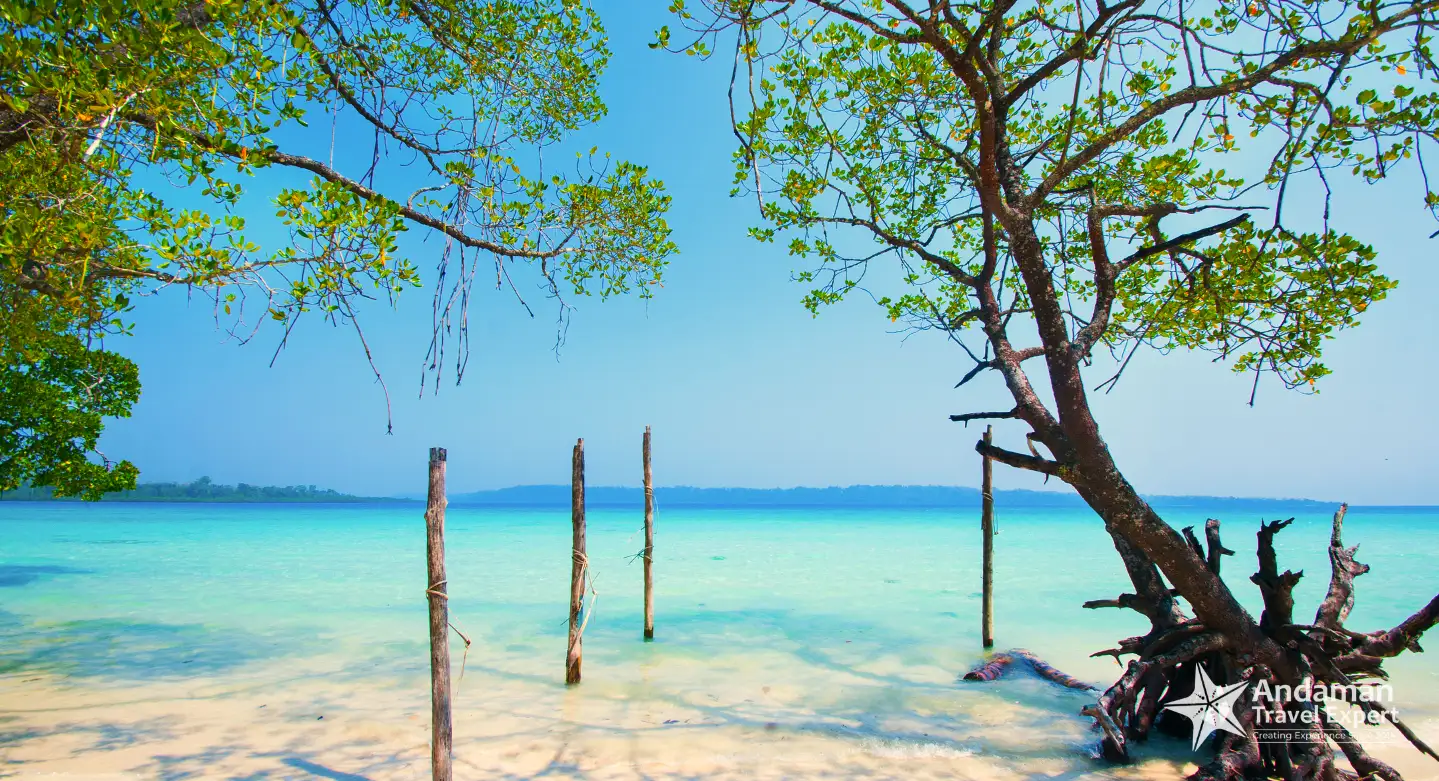
Step inland and the Andamans reveal a different side. Dense tropical rainforest covers much of the land, home to species found nowhere else, and the far north holds Saddle Peak, the highest point in the islands. Mangrove creeks wind through Baratang and the middle islands, sheltering limestone caves and India's only mud volcanoes. Turtle-nesting beaches, birdlife and marine sanctuaries make the archipelago as rewarding for nature lovers as it is for beachgoers. The protected status of many areas has kept much of this environment intact, so responsible travel here still means encountering places that feel genuinely wild.
Culture and everyday life
Modern Andaman society is a quiet blend of communities who settled here from across India over generations, alongside the islands' indigenous heritage. Hindi and English are widely spoken, with Bengali and Tamil common in daily life. The pace is unhurried, the seafood is fresh, and the islands run on the rhythm of the sea and its ferries. It is a place where a busy harbour town and near-empty islands sit only a short boat ride apart.
Getting there and getting around
Most visitors arrive by air into Veer Savarkar International Airport in Port Blair, with direct flights from Chennai, Kolkata, Delhi, Bengaluru and other hubs. From Port Blair, the islands are linked by sea, with private air-conditioned catamarans and government ferries connecting the main tourist islands. Indian nationals need no permit for the main islands, while foreign visitors receive a permit on arrival. The best time to visit runs from October to May, when the seas are calm and every water activity is at its best. For a fuller breakdown, see our island guide and itinerary planner.
Planned by people who live here
We are based in Port Blair and run our own operations on the ground across Port Blair, Swaraj Dweep and Shaheed Dweep. That means your trip is shaped by people who know the ferries, the seasons and the quiet corners first hand, not from a brochure. From hotels and transfers to diving and offbeat island add-ons, we handle the whole plan end to end so you travel with local knowledge behind every detail.
Tell us your dates and what you are after, and we will build an itinerary that fits the islands to your trip at the right pace.